Veneer Case 1
BEFORE
AFTER

Cosmetic dentistry is the group of dental treatments that change how your teeth look — their colour, shape, length, spacing and alignment — rather than treating pain or infection. If you live in the UK or Ireland and you are considering having this work done in Istanbul, the decision is less about the country and more about which treatment you actually need, how many days it takes, and what happens once you fly home.
This page is written for that decision. It includes the parts most clinic websites leave out: who is not suitable, what a realistic week in Istanbul looks like, and what your options are if something goes wrong after you land back at Heathrow, Manchester or Dublin.
Direct answer
Cosmetic dentistry covers treatments that improve the appearance of teeth, including composite bonding, veneers, crowns, whitening and digital smile design. Patients from the UK and Ireland travel to Istanbul mainly for cost and waiting-time reasons. It is generally worth travelling only when the treatment plan is conservative, written down in advance, and the route home for aftercare is clear before you book a flight.
Whitening
Colour only
Lightens natural enamel. Does not change shape, and does not lighten existing crowns, veneers or fillings.
Alignment
Moves teeth
Braces or aligners move the teeth you already have instead of covering them. Slow, and usually the most conservative route.
Composite bonding
Added, not removed
Composite shaped onto the tooth, often with little or no enamel removed. Repairable in a single appointment.
Veneers
Front layer prepared
Thin ceramic bonded to the front of the tooth. Longer-lasting than composite, and not reversible.
Crowns
Full coverage
Right for a broken or heavily filled tooth. A large step to take on a healthy tooth for appearance alone.
Almost every cosmetic treatment plan you will be quoted is built from these five building blocks. Understanding them is the single most useful thing you can do before speaking to any clinic — including this one.
Tooth-coloured composite resin is sculpted directly onto the tooth surface, layer by layer, then shaped and polished in the same appointment. It is used to close small gaps, rebuild chipped edges, lengthen short teeth and mask minor irregularities. It is the most conservative option in this list because it usually removes little or no healthy enamel, which also makes it the most reversible.
Composite bonding is the treatment most UK and Irish patients are actually looking for when they search for “veneers”, and it is the one we cover in the most detail on our dedicated page: composite bonding.
Thin ceramic shells bonded to the front surface of the tooth. They resist staining better than composite and hold their surface polish for longer, but preparing the tooth normally means removing a layer of enamel — and enamel does not grow back. Once a tooth is prepared for a veneer, it will generally need some form of restoration for the rest of its life.
BEFORE
AFTER
BEFORE
AFTER
BEFORE
AFTER
BEFORE
AFTER
BEFORE
AFTER
BEFORE
AFTER
BEFORE
AFTER
BEFORE
AFTER
BEFORE
AFTER
Real results, photographed before treatment and after completion. They are not a prediction of your own outcome: the starting condition of the teeth differs in every mouth, and that is what decides how much of a change is possible.
A crown covers the whole tooth rather than just the front face. Crowns are the right answer for heavily filled, root-treated or badly broken-down teeth. They are the wrong answer for healthy teeth that simply look uneven — a point worth holding on to, because full-mouth crown plans on otherwise healthy teeth are the single most criticised practice in dental tourism.
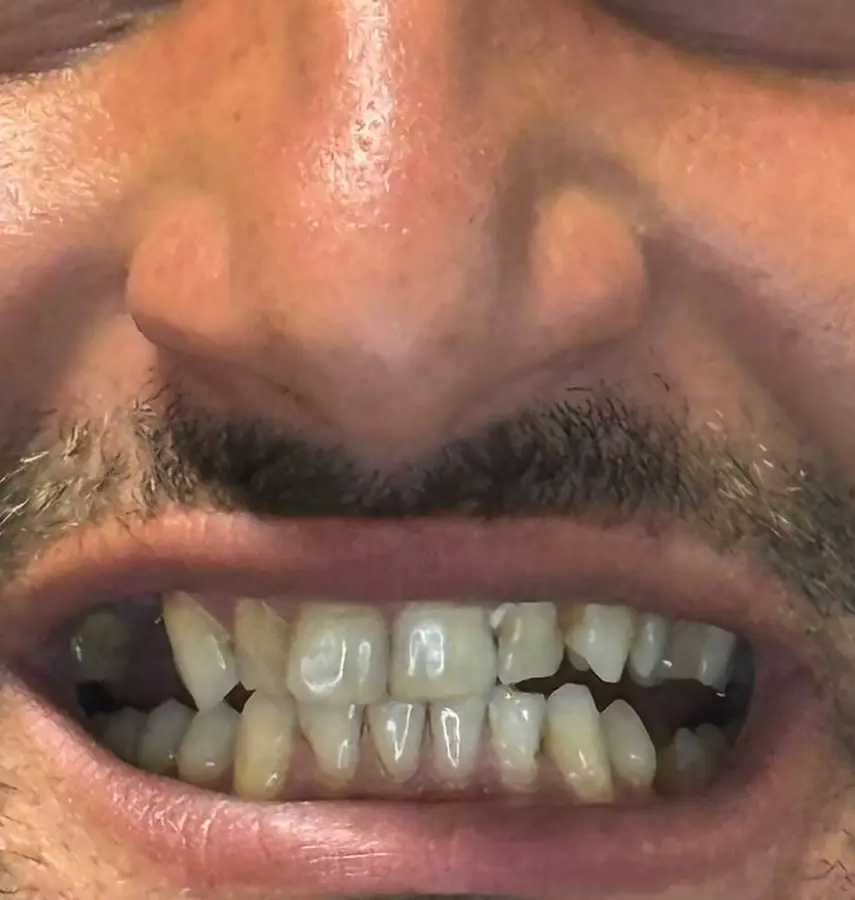
BEFORE
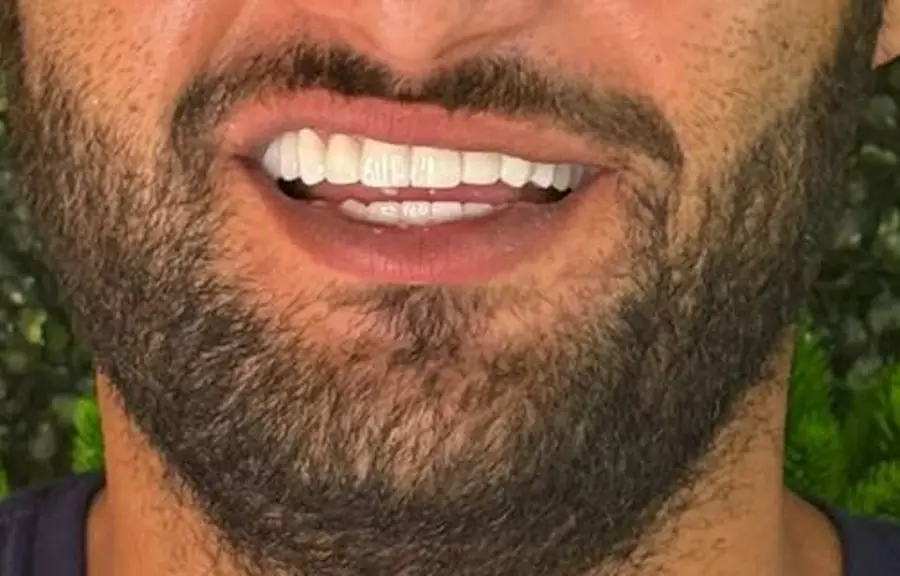
AFTER
Treatment: e.max crowns, upper front teeth. Treatment by Dt. Dilan Altun. One real result, photographed before treatment and after completion — not a prediction of your own outcome, since starting tooth condition differs in every mouth.
Professional whitening lightens the natural tooth shade. The order of operations matters: whitening does not change the colour of composite, veneers or crowns. If you want a lighter overall result, whitening is normally done first, the shade is allowed to settle, and only then is the bonding or ceramic work matched to the new shade.
DentVisit uses intraoral scanning and digital imaging to plan cosmetic cases. In practice this means a proposed result can be designed and discussed before any tooth is touched. A digital design is a planning and communication tool — it is a projection of an intended outcome, not a promise of one.
Cosmetic treatment tends to work well when:
Most clinic pages skip this section. It is here because turning down the wrong case protects you and protects us.
You should not proceed until these are treated or resolved:
You should think much harder if:
This is the comparison that decides most cases. The honest version includes the weaknesses of each option — including the one we most often recommend.
| Criterion | Composite bonding | Porcelain / e.max veneers | Zirconia / e.max crowns |
|---|---|---|---|
| What it is | Resin sculpted directly onto the tooth, same day | Thin ceramic shell bonded to the front of the tooth | Full ceramic cap covering the whole tooth |
| Healthy enamel removed | Little or none in most cases | A layer of front-surface enamel | Substantial, all around the tooth |
| Reversible? | Usually yes | Generally no | No |
| Typical appointments | 1–2 | 3–4 across roughly a week | 3–4 across roughly a week |
| Published longevity evidence | Anterior composite restorations: annual failure rates 0–4.1%, total failure 24.1% across 1,821 restorations in 17 studies (Demarco et al., Dental Materials, October 2015, PMID 26303655) | Ceramic veneers: 94.4% survival at 5 years, 93.5% at 10 years, 82.9% at 20 years across 318 restorations (Beier et al., Int J Prosthodont, 2012, PMID 22259802) | No single figure quoted — crown longevity depends heavily on the condition of the underlying tooth |
| Stains over time? | Yes — this is its main cosmetic weakness | Resists staining well | Resists staining well |
| Repairable in the chair? | Yes, usually added to and repolished | Chipped ceramic often means replacement | Usually replacement |
| Best for | Chips, small gaps, worn edges, minor shape changes | Stable, well-maintained teeth where colour and surface finish matter most | Teeth already heavily filled, root-treated or broken down |
| Weakest point | Stains, dulls and chips sooner than ceramic; needs polishing and occasional repair | Irreversible enamel removal; fracture risk in patients who grind | Most tissue removed of the three; overused in cosmetic-only cases |
| Relative cost (ranking, not a price) | Lowest of the three | Middle to high | Highest |
Comparison compiled by DentVisit, August 2026. Longevity figures come from the peer-reviewed sources cited in the cells and describe study populations, not individual outcomes.
Where we will argue against ourselves: composite bonding is cheaper, faster and kinder to the tooth, but it is the option that will look tired soonest. If you drink a lot of red wine, coffee or black tea, or if you smoke, bonding will discolour and will need maintenance appointments. A patient who is unwilling to accept that maintenance is genuinely better served by ceramic — or by not treating at all.
If you have gathered three quotes and they are wildly different, the difference is usually not “one clinic is greedy”. It is almost always one of these:
Before you compare any two prices, make them comparable: ask for the specific tooth numbers, the specific material, and what is excluded.
Consultation and records
Examination, photographs and scans. The plan is agreed and written down before any tooth is touched.
Preparation
Teeth prepared only where the plan calls for it, temporaries fitted, shade chosen in daylight rather than under a treatment lamp.
Laboratory
Ceramics are made. Compressing this stage costs you fit and colour, which are the two things you will look at every day.
Try-in and fit
Fit, contacts and appearance checked before anything is bonded. Small changes at this stage are normal, not a setback.
Settling day
One clear day before flying home, so a bite adjustment is a short appointment rather than a new journey.
Below is the clinical sequence, not a holiday itinerary. Actual scheduling is set after your case is reviewed, and simple cases are shorter.
Composite bonding — typically 1–2 working days
| Day | What happens |
|---|---|
| Day 1 | Examination, radiographs and intraoral scan, shade selection, treatment plan confirmed. Bonding often started the same day. |
| Day 2 | Remaining teeth completed, bite checked, final polish, aftercare instructions. |
Veneers or crowns — typically 5–7 working days
| Day | What happens |
|---|---|
| Day 1 | Examination, radiographs, intraoral scan, photographs, digital design discussion, written treatment plan. |
| Day 2 | Any preparatory treatment. Tooth preparation, impressions or digital scan, temporary restorations fitted. |
| Days 3–4 | Laboratory fabrication. No chair time; some cases have a shade or try-in appointment. |
| Day 5 | Try-in of the finished restorations. Shape, length and colour reviewed before anything is cemented. |
| Day 6 | Final cementation, bite adjustment, polishing. |
| Day 7 | Review appointment, final checks, photographs, aftercare briefing. |
Sequence published by DentVisit, August 2026. Timings are typical clinical ranges and are confirmed individually after case review.
Two practical rules for booking flights:
Before you travel, you can send your X-ray to DentVisit by WhatsApp for a free pre-assessment, and a detailed written treatment plan is provided before any commitment — so you know what is proposed before you book anything.
This is the question UK dental websites use as their strongest argument against treatment abroad, and it deserves a straight answer rather than silence.
What is true:your treating clinic is in Istanbul, and your day-to-day dentist is not. NHS England’s policy, published on 4 November 2024, states that patients who paid for dental treatment privately in the UK or abroad and later need NHS care “are entitled to access NHS dental care for assessment and evaluation to stabilise their condition”, but that “self-funded care that the NHS would not routinely fund would not usually be offered or replaced once stabilisation has been achieved”. The same policy states that “it is expected that patients would initially seek support from their self-funded dental care provider”.
In plain English: if something goes badly wrong, the NHS will make you safe and comfortable. It will not rebuild your cosmetic work for free. Your first call is to the clinic that carried out the treatment.
What DentVisit provides: a free pre-assessment from your X-ray before you travel, a detailed written treatment plan before any commitment, English-speaking support, and post-treatment remote follow-up. Keep that treatment plan — if you ever see another dentist, the materials and tooth numbers on it will save time and money.
What you should arrange yourself, before you travel:
Some sensations are expected. Some are not. Contact a dentist promptly if you notice any of the following:
The country is not the risk factor — the treatment plan is. Ceramic and composite materials are the same internationally, and DentVisit's dentists are registered with the Turkish Dental Association. Risk rises sharply when healthy teeth are crowned unnecessarily or when a plan is compressed into too few days. Judge the plan, the tooth count and the material, not the postcode.
Composite bonding is typically completed in one to two working days. Veneers or crowns typically take five to seven working days, because a dental laboratory needs time between preparation and fitting. Cases needing gum treatment or root canal work first take longer. Always leave one clear day between your final appointment and your flight home.
It depends entirely on the treatment. Composite bonding usually removes little or no enamel. Ceramic veneers require a layer of front-surface enamel to be removed. Crowns require preparation all around the tooth. If you are offered crowns on healthy, unfilled teeth for cosmetic reasons only, ask why a more conservative option is not suitable.
Published evidence gives ranges, not promises. Ceramic veneers showed 93.5% survival at 10 years and 82.9% at 20 years in an analysis of 318 restorations (Beier et al., 2012). Anterior composite restorations showed annual failure rates of 0–4.1% across 17 studies and 1,821 restorations (Demarco et al., 2015). Individual results vary with grinding, diet and hygiene.
NHS dentistry is provided on the basis of clinical need, not appearance. Treatment carried out purely to improve how teeth look is generally not available under NHS band charges, which is why most UK patients pay privately for bonding, veneers and whitening. Check current NHS guidance for your own circumstances, as clinical-need decisions are made case by case.
Composite bonding can usually be repaired and repolished in a single appointment by any competent dentist, including at home. Chipped ceramic more often needs replacement. Keep your written treatment plan so materials and shades can be matched. Contact your treating clinic first — it holds your records and your case photographs.
Composite bonding on unprepared enamel often needs no anaesthetic at all. Tooth preparation for veneers or crowns is carried out under local anaesthetic, so you should feel pressure and movement rather than pain. Mild sensitivity for a few days afterwards is common while temporaries are in place. Pain that increases rather than settles is not expected and should be reported.
It is possible but not advisable. New restorations frequently need a small bite adjustment once you have eaten and spoken with them, and that adjustment takes minutes if you are still in Istanbul and a new trip if you are not. Book your flight for the day after your final fitting.
A registered dentist will see you for examination, hygiene and any treatment you need. What may be declined is responsibility for redoing another clinic's cosmetic work under the NHS — NHS England's 4 November 2024 policy is explicit that stabilisation is covered but replacement of self-funded work generally is not. Register with a dentist at home before you travel.
Before. Whitening agents lighten natural enamel but do not change the colour of composite, ceramic or crowns. If you whiten after treatment, your natural teeth will move away from the shade of your restorations. The usual sequence is whitening first, a settling period, then shade matching and bonding or ceramic work.
If you are unsure which of these treatments applies to you, start with the least invasive option and work upwards. For most UK and Irish patients enquiring about a “smile makeover”, the honest starting point is composite bonding — and if it is not right for your case, a proper assessment will say so.
If you are missing teeth rather than reshaping them, see our guide to dental implants.
You can send your X-ray by WhatsApp for a free pre-assessment before you book anything: contact DentVisit.
This page is general information about treatment options. It is not a diagnosis, and it is not a substitute for a clinical examination. Individual results vary and cannot be predicted from a web page.
Sources
Sources reviewed August 2026. PubMed records (title, authors, journal, year, numeric results) verified against the NCBI E-utilities API on 8 August 2026.
Make an appointment to get detailed information about aesthetic dentistry and create a personalized treatment plan.
Book NowImportant Note: The information on this website is for general informational purposes only and does not replace professional medical advice. Please consult a qualified dentist for any health concern or treatment decision.