
Dental Implants in Istanbul: An Honest Guide for UK and Irish Patients
A dental implant is a small titanium post placed into the jawbone to replace the root of a missing tooth; a crown, bridge or denture is then attached to it. For patients in the UK and Ireland, implants are the treatment most affected by NHS waiting times and private cost, which is why so many people start looking at Istanbul.
Implants are also the treatment where rushing does the most damage. This page sets out the real clinical timeline — including why one trip is usually not enough — who is not a candidate, what the published success evidence actually says, and what your options are once you are home.
Are dental implants in Turkey a good idea, and how long do they take?
Direct answer
Dental implants can be carried out safely in Turkey, but in most cases they cannot honestly be completed in a single short trip. The implant needs to fuse with the bone — a process called osseointegration — which typically takes three to six months. Most patients therefore need two trips to Istanbul, separated by that healing period.
How a dental implant actually works
An implant is three separate components, not one:
- The fixture— the titanium post placed into the jawbone. This is what is meant by “the implant”.
- The abutment — the connector that sits at gum level and joins the fixture to the visible tooth.
- The restoration — the crown, bridge or denture you actually see and chew with.
Between placing the fixture and fitting the final restoration, the bone grows onto the implant surface and locks it in place. This is osseointegration, and it is biology, not scheduling. It typically takes three to six months, and it is longer where bone quality is poor or where grafting has been carried out. No clinic can shorten this process by wanting to.
Some cases allow a temporary tooth to be fitted straight away so that you are not left without a front tooth. A temporary is a cosmetic and functional placeholder during healing — it is not the finished result.
What the evidence says about implant success
Implants are among the best-documented procedures in dentistry, which means we can quote real numbers instead of marketing claims.
- 10-year survival at implant level was 96.4% (95% CI 95.2–97.5%) in a systematic review and sensitivity meta-analysis of 18 prospective studies — Howe, Keys & Richards, Journal of Dentistry, May 2019 (PMID 30904559). The same paper’s sensitivity analysis, which accounted for patients lost to follow-up, produced a lower estimate of 93.2% (95% CI 90.1–95.8%), and survival in patients aged 65 and over was 91.5%.
- Cumulative mean survival was 94.6%, with mean marginal bone loss of 1.3 mm, across 7,711 implants in 23 studies with a mean follow-up of 13.4 years — Moraschini et al., International Journal of Oral and Maxillofacial Surgery, March 2015 (PMID 25467739).
Two things follow. First, implants have a strong long-term track record. Second, “success rate over 98%” claims — common on dental tourism websites — are higher than the pooled published evidence supports. Where a figure carries no source and no follow-up period, treat it as advertising.
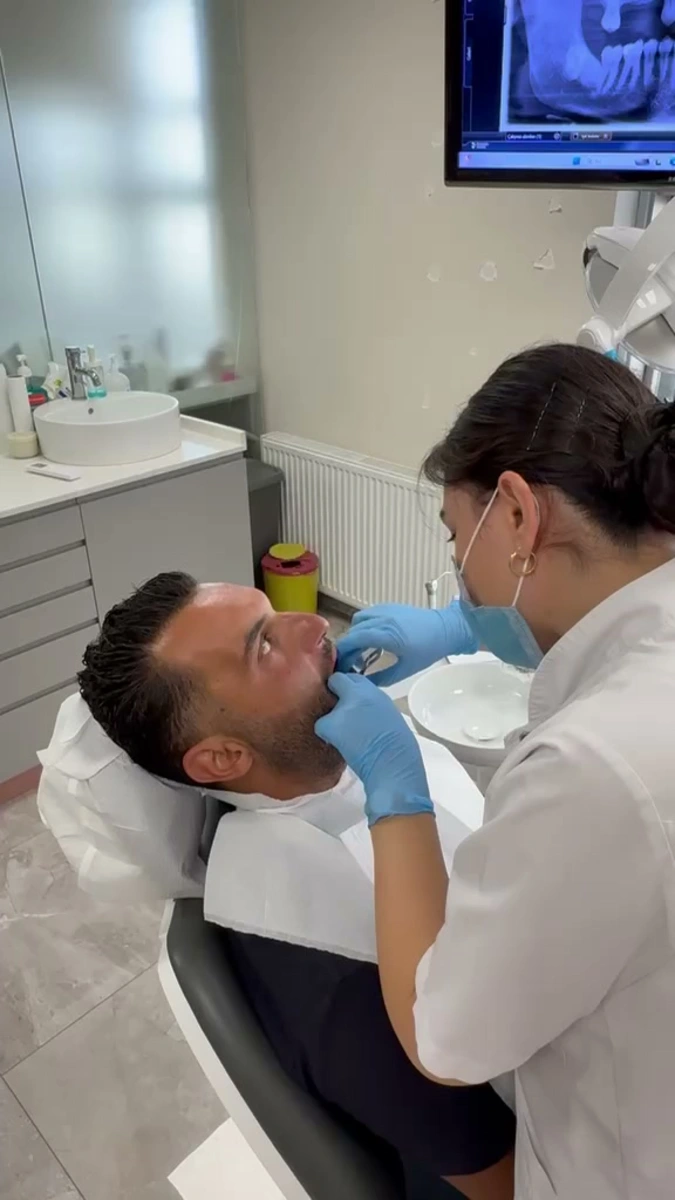
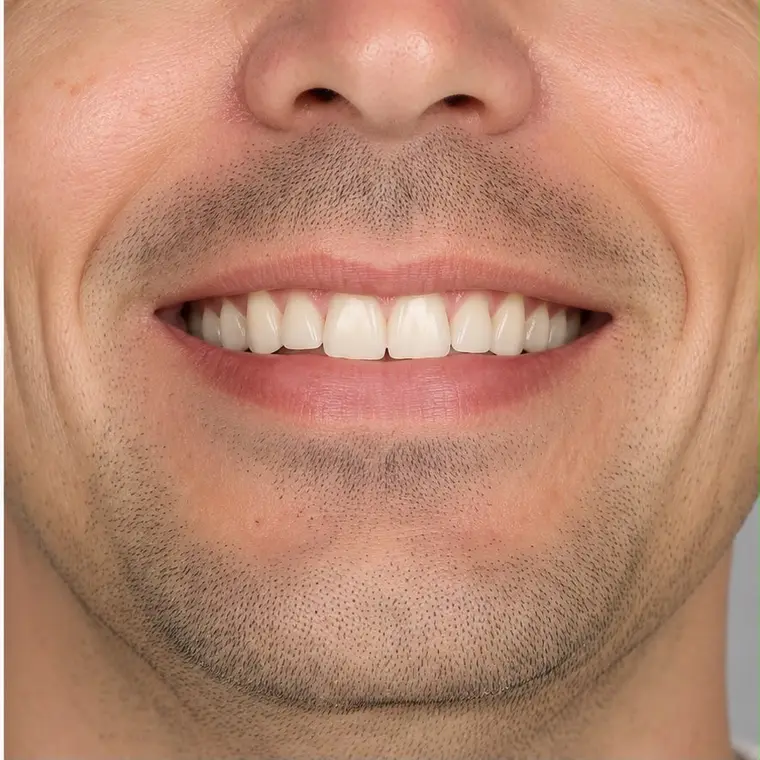
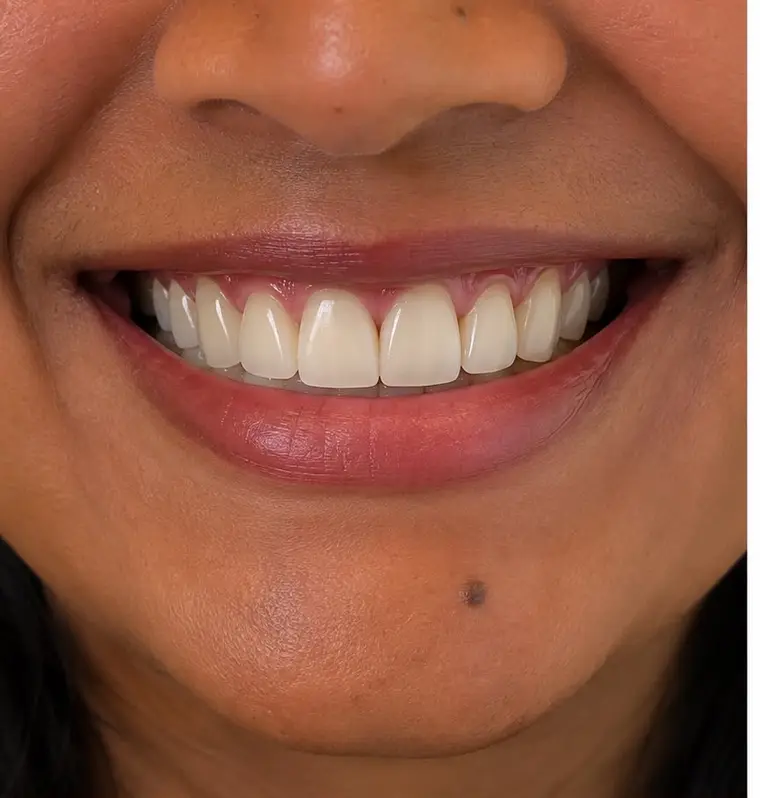
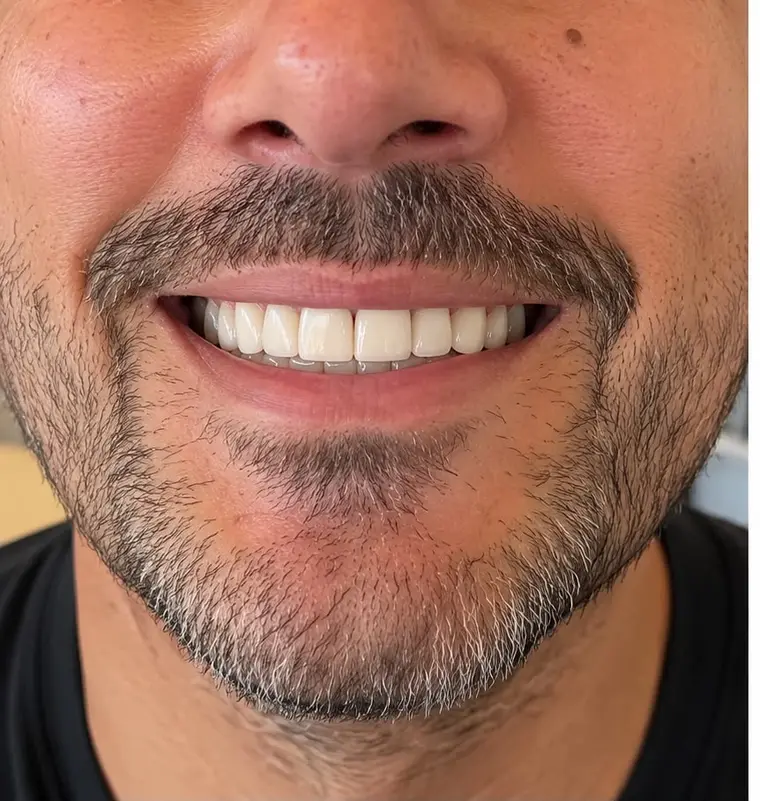
Illustrative smile images. Not patient cases.
Who is a good candidate
Implant treatment tends to go well when:
- You have one or more missing teeth, or teeth that cannot be saved.
- Your gums are healthy, or any gum disease has been treated and stabilised before implants are placed.
- You have sufficient bone volume, or you accept that grafting may be needed and adds time.
- Your general health is stable and any long-term conditions are well controlled.
- You do not smoke, or you are willing to stop around the surgery and healing period.
- You can commit to two trips and to maintenance appointments at home for as long as you have the implants.
Who is NOT a good candidate
This section exists because a clinic that says yes to everyone is telling you something about itself.
Absolute or near-absolute barriers:
- Active, untreated gum disease. The bacteria that destroy bone around natural teeth also destroy bone around implants. Periodontal treatment first, implants second — there is no shortcut here.
- Incomplete jaw growth. Implants are generally not placed in adolescents whose facial growth is unfinished, because the implant does not move as the jaw develops.
- Current or recent intravenous antiresorptive or bisphosphonate therapy, and some cancer treatments. This requires medical liaison, not a booking form.
- Uncontrolled diabetes or other uncontrolled systemic disease, until stabilised with your doctor.
Significant risk factors that must be discussed honestly:
- Smoking. A meta-analysis of 107 clinical studies found implant failure in 6.35% of implants in smokers (1,259 of 19,836) compared with 3.18% in non-smokers (1,923 of 60,464), alongside higher rates of post-operative infection and marginal bone loss — Chrcanovic, Albrektsson & Wennerberg, Journal of Dentistry, 2015 (PMID 25778741). The authors noted these findings should be interpreted with caution because of uncontrolled confounding factors in the studies reviewed. Smoking is not an automatic refusal, but it changes the risk conversation.
- Heavy grinding or clenching. Overloading is a known cause of mechanical failure of the restoration and its components.
- Poor oral hygiene, or unwillingness to attend maintenance appointments. Implants need more cleaning discipline than natural teeth, not less.
- Insufficient bone with no willingness to graft. Grafting or a sinus lift adds months, sometimes an extra visit. If that is not possible for you, a bridge or denture may genuinely be the better plan.
- Needing everything finished in one short trip. This is the most common reason we would advise against proceeding. Compressing implant treatment to fit a flight schedule is how avoidable failures happen.
Denture
Removable
No surgery and the lowest cost. It rests on the gum, comes out to clean, and does not stop bone shrinking underneath.
Bridge
Uses the neighbours
Fixed and comparatively fast, but the healthy teeth either side are prepared to carry it. That preparation cannot be undone.
Implant
Replaces the root
Stands on its own and leaves neighbouring teeth untouched. Needs enough bone, and needs healing time before the final crown.
Implants vs bridges vs dentures
There is no universally correct answer. There is a correct answer for your mouth, your health and your circumstances.
| Criterion | Dental implant | Conventional bridge | Removable denture |
|---|---|---|---|
| What it replaces | The root and the tooth | The tooth only, anchored to neighbouring teeth | The tooth only, resting on gum and remaining teeth |
| Neighbouring teeth affected? | No | Yes — adjacent teeth are prepared and crowned | Usually clasped, which can add wear and plaque traps |
| Total treatment time | Typically 3–6 months, longer with grafting | Typically 1–2 weeks | Typically 2–6 weeks |
| Trips to Istanbul | Usually 2 | Usually 1 | Usually 1 |
| Bone preservation | Loading the bone helps maintain it | Does not load the bone under the gap | Does not load the bone under the gap |
| Feels fixed? | Yes | Yes | No — removed for cleaning |
| Published longevity evidence | 10-year survival 96.4% (Howe et al., J Dent, May 2019); 94.6% at mean 13.4 years (Moraschini et al., Int J Oral Maxillofac Surg, March 2015) | No figure quoted — depends on the health of the anchor teeth | Relines and remakes are expected as the ridge changes shape |
| Main risk to manage | Peri-implantitis; needs ongoing hygiene and maintenance | Failure of an anchor tooth takes the whole bridge with it | Fit changes over time; chewing efficiency lower |
| Relative upfront cost (ranking, not a price) | Highest | Middle | Lowest |
| Suits you if | You want a fixed result, have healthy gums and can commit to two trips | You need a fixed result quickly and the neighbouring teeth already need crowns | Cost, medical health or bone volume rules out surgery |
Comparison compiled by DentVisit, August 2026. Survival figures describe study populations in the cited peer-reviewed sources, not individual outcomes.
Where we will argue against ourselves: implants are the most expensive of the three, the slowest, the only surgical one, and the only one needing two flights. For a patient with a single gap between two teeth that already need crowns, a bridge can be the more sensible plan — and for a medically complex patient, a well-made denture is not a failure, it is good judgement.
When you compare quotes, make them comparable. Implant quotes differ because they include different things. Ask, in writing, whether the figure covers: the fixture, the abutment, the final crown, any bone graft or sinus lift, imaging, temporary restorations, and review appointments. A quote “per implant” that excludes the abutment and the crown is not comparable to one that includes them.
Bone grafting and sinus lifts
Where a tooth has been missing for a long time, the bone that used to support it shrinks. If there is not enough width or height left, bone grafting rebuilds it; in the upper back jaw, a sinus lift creates height beneath the sinus floor.
This matters for your planning because grafting adds healing time — often several months on top of the normal osseointegration period, and occasionally a separate visit before implants can be placed at all. A clinic that promises implants without ever mentioning the possibility of grafting has not looked at your bone.
- 01Trip 1
Assessment
Examination and imaging. Implant count, plan and cost are agreed before anything is placed.
- 02Trip 1
Fixture placed
The titanium post goes into the jawbone under local anaesthetic. A temporary tooth may be fitted where a gap would show.
- 033–6 months
Osseointegration
Bone grows onto the implant surface. This is biology, not scheduling, and it happens while you are back at home.
- 04Trip 2
Crown fitted
Abutment and final restoration are made and fitted, then the bite is checked and adjusted.
- 05Ongoing
Maintenance
Hygiene visits and checks with a dentist you can reach. Implants need looking after in the same way teeth do.
What the treatment actually looks like, trip by trip
The sequence below is the clinical pathway, not a travel package. Your own schedule is confirmed after your case is reviewed.
Trip 1 — implant placement, typically 3–5 days
| Day | What happens |
|---|---|
| Day 1 | Examination, radiographs and imaging, intraoral scan, medical history review, written treatment plan confirmed and consented. |
| Day 2 | Any extractions. Implant fixtures placed under local anaesthetic. Bone graft placed if needed. Post-operative instructions given. |
| Day 3 | Rest day. Swelling and bruising typically peak around days 2–3. |
| Day 4 | Post-operative review. Temporary restoration checked or fitted where the case allows. |
| Day 5 | Final check before flying, written aftercare instructions, suture removal timing discussed. |
Healing period — typically 3–6 months, at home
You return to normal life. This is when the bone integrates with the implant. Your part is hygiene, avoiding smoking, and reporting anything unusual.
Trip 2 — restoration, typically 5–7 days
| Day | What happens |
|---|---|
| Day 1 | Review, radiograph to check integration, healing abutment placed or exposed if required. |
| Days 2–3 | Impressions or digital scan for the final crown, bridge or denture. Shade selection. |
| Day 4 | Laboratory fabrication. No chair time. |
| Days 5–6 | Try-in, fit and bite adjustment. |
| Day 7 | Final fit, occlusion check, hygiene instruction, photographs, review. |
Sequence published by DentVisit, August 2026. Timings are typical clinical ranges, confirmed individually after case review.
Practical rules for booking flights:
- Ask before you book who will remove your sutures and when — this usually falls around 7 to 10 days after surgery, by which time you are normally home.
- Leave a clear day between your final fitting and your flight on trip 2.
- Do not book non-refundable flights for trip 2 until integration has been confirmed. Healing sets that date, not the calendar.
Before travelling, you can send your X-ray to DentVisit by WhatsApp for a free pre-assessment and case review, and a detailed written treatment plan is provided before any commitment — so you know what is proposed, and how many trips it will take, before you book anything.
Illustrative smile images. Not patient cases.
Aftercare once you are back in the UK or Ireland
This is the objection UK dental websites press hardest, and it deserves an answer rather than silence.
What is true:your surgeon is in Istanbul and your everyday dentist is not. NHS England’s policy, published on 4 November 2024, states that patients who paid for dental treatment privately in the UK or abroad and later need NHS care “are entitled to access NHS dental care for assessment and evaluation to stabilise their condition”, but that “self-funded care that the NHS would not routinely fund would not usually be offered or replaced once stabilisation has been achieved”. The policy also states that “it is expected that patients would initially seek support from their self-funded dental care provider, who should be responsible for any post-treatment clinical issues within a reasonable timeframe”.
In plain terms: the NHS will make you safe. It will not routinely replace implant work you funded yourself. Your first call is to the clinic that placed the implants.
Peri-implantitis is the risk that actually matters long term. In a systematic review of current epidemiology, weighted mean prevalences were 43% (CI 32–54%) for peri-implant mucositis and 22% (CI 14–30%) for peri-implantitis at patient level, with prevalence increasing the longer the implants had been in function — Derks & Tomasi, Journal of Clinical Periodontology, April 2015 (PMID 25495683). This is inflammation of the tissue around the implant. It is largely preventable, and prevention happens at home with your dentist and hygienist — not in Istanbul.
What DentVisit provides: a free pre-assessment and case review from your X-ray before you travel, a detailed written treatment plan before any commitment, English-speaking support, and post-treatment remote follow-up.
What you should arrange yourself, before you travel:
- A registered dentist and hygienist at home, booked for maintenance at the interval they recommend.
- Ask which implant system will be used, and whether its components are available in the UK and Ireland. If your implant ever needs a replacement screw or abutment, a dentist at home needs to be able to source the matching part. Get the system name in writing and keep it with your treatment plan.
- Clarity on who to contact and how, outside clinic hours. DentVisit is open Monday to Friday 10:00–18:00 and Saturday 10:00–17:00, Turkish time (UTC+3), and is closed on Sundays.
- Written answers to the questions the General Dental Council advises patients to ask before going abroad, including “Who will be carrying out my treatment and what qualifications do they have?”, “Is the work guaranteed for a certain period of time?”, “What aftercare do you provide?” and “If there are complications and I need further treatment, is this included in the initial cost?”
When to worry after implant surgery
Some discomfort, swelling and bruising in the first few days is expected. The following are not, and should be assessed:
- Pain that increases after day three instead of settling.
- Swelling that worsens after day three, especially with fever or a bad taste — this suggests infection.
- An implant or restoration that feels loose or moves. A loose implant is never normal, at any stage.
- Persistent numbness or altered sensation in the lip, chin or tongue beyond the expected duration of the anaesthetic.
- Gums that bleed easily, look red or recede around an implant — the early sign of peri-implant disease.
- Any facial swelling with fever, or difficulty swallowing or breathing — this is an emergency. Seek urgent local care the same day; do not wait for your next trip.
Next steps
If your teeth are missing or failing, an implant assessment starts with imaging and a written plan — not with a price. If your teeth are present but you dislike how they look, the starting point is different: see our guide to cosmetic dentistry, and, for chips, worn edges and small gaps, the most conservative option is usually composite bonding.
Send your X-ray by WhatsApp for a free pre-assessment before you book anything: contact DentVisit.
Frequently asked questions
How long do dental implants last?
Published evidence reports ranges rather than guarantees. A 2019 meta-analysis found 10-year implant survival of 96.4% (95% CI 95.2–97.5%), falling to 93.2% when losses to follow-up were accounted for. A 2015 review of 7,711 implants reported 94.6% survival at a mean follow-up of 13.4 years. Longevity depends heavily on hygiene, smoking and maintenance.
How many trips to Turkey do I need for implants?
Usually two. The first trip is for placement and typically takes three to five days. The implant then needs three to six months to integrate with the bone while you are at home. The second trip, for the final crown or bridge, typically takes five to seven days. Cases needing bone grafting take longer.
Are dental implants painful?
Implant placement is carried out under local anaesthetic, so you should feel pressure and movement rather than pain during the procedure. Afterwards, discomfort, swelling and bruising are common for a few days and are usually managed with prescribed painkillers. Pain that increases after day three, rather than settling, is not expected and should be reported.
Can I have implants if I smoke?
Smoking is not an automatic refusal, but it materially raises risk. A meta-analysis of 107 studies found failures in 6.35% of implants in smokers versus 3.18% in non-smokers, with more post-operative infections and bone loss. Most clinicians will ask you to stop before surgery and throughout healing. Discuss it openly rather than leaving it off the form.
What about full-arch implants such as All-on-4 or All-on-6?
These names describe protocols in which a full fixed bridge is supported by a small number of implants in one jaw. They suit some patients with extensive tooth loss and rule out others, depending on bone volume, bite and general health. Suitability can only be assessed from imaging and a clinical examination, never from a photograph or a price list.
Can I fly after implant surgery?
Most patients fly home a few days after placement, once the post-operative review is complete. Flying too soon after surgery is uncomfortable and makes any early complication harder to manage. Confirm the timing for your own case with the treating clinician, and plan for suture removal, which usually falls around 7 to 10 days after surgery.
Do I need a bone graft?
Only imaging and an examination can answer this. Bone shrinks after a tooth is lost, so the longer a gap has existed, the more likely grafting becomes. Grafting adds healing time and sometimes an extra visit. Any quote given before proper imaging should be treated as provisional, because grafting changes both the timeline and the cost.
What happens if an implant fails after I go home?
Contact the treating clinic first — NHS England's policy states that patients are expected to seek support from their self-funded provider initially. An NHS dentist can assess and stabilise you, but will not routinely replace self-funded work. Keep your treatment plan, the implant system name and your X-rays so that any dentist can act quickly.
Will a dentist in the UK or Ireland look after my implants?
Yes, for examination, hygiene and maintenance — this is normal, and you should register with one before travelling. What may be declined is responsibility for replacing another clinic's work. Component availability matters here: ask which implant system is being used, so replacement parts can be sourced locally if they are ever needed.
Can I have implants and cosmetic work at the same time?
Often yes, but sequence matters. Implants dictate the timeline because of healing, so cosmetic work on the remaining teeth is usually planned around the implant stages and completed at the restorative visit, so that shade and shape match. Agree the whole plan at the start rather than adding treatments trip by trip.
Why are implant prices so different between clinics?
Because the quotes cover different things. Some include the fixture only; others include the abutment, crown, imaging, grafting and review appointments. Implant systems, laboratory work and the number of appointments also differ. Ask for an itemised written plan naming each component — a single headline figure tells you almost nothing.
Medical review and sources
This page is general information about treatment options. It is not a diagnosis, and it is not a substitute for a clinical examination and imaging. Individual results vary and cannot be predicted from a web page.
Sources
- Howe MS, Keys W, Richards D. Long-term (10-year) dental implant survival: A systematic review and sensitivity meta-analysis. Journal of Dentistry. 2019 May;84:9-21. PMID 30904559. doi:10.1016/j.jdent.2019.03.008
- Moraschini V, Poubel LA, Ferreira VF, Barboza Edos S. Evaluation of survival and success rates of dental implants reported in longitudinal studies with a follow-up period of at least 10 years: a systematic review. International Journal of Oral and Maxillofacial Surgery. 2015 Mar;44(3):377-88. PMID 25467739. doi:10.1016/j.ijom.2014.10.023
- Derks J, Tomasi C. Peri-implant health and disease. A systematic review of current epidemiology. Journal of Clinical Periodontology. 2015 Apr;42(Suppl 16):S158-71. PMID 25495683. doi:10.1111/jcpe.12334
- Chrcanovic BR, Albrektsson T, Wennerberg A. Smoking and dental implants: A systematic review and meta-analysis. Journal of Dentistry. 2015 May;43(5):487-98. PMID 25778741.
- General Dental Council. Going abroad for dental treatment — patient information. gdc-uk.org
- NHS England. Avoidance of doubt: Clinical policy for self-funded dental treatment requiring NHS intervention. Published 4 November 2024. england.nhs.uk
- NHS. Treatment abroad checklist. nhs.uk
Sources reviewed August 2026. PubMed records (title, authors, journal, year, numeric results) verified against the NCBI E-utilities API on 8 August 2026.
Book Appointment
Make an appointment to get detailed information about implant treatment and create a personalized treatment plan.
Book NowImportant Note: The information on this website is for general informational purposes only and does not replace professional medical advice. Please consult a qualified dentist for any health concern or treatment decision.