
Gum Disease Treatment in Istanbul: An Honest Guide for UK and Irish Patients
Gum disease — periodontal disease — is a bacterial inflammation of the tissue and bone that hold your teeth in place. It is the most common reason adults lose teeth, and it is nearly always painless until it is advanced, which is precisely what makes it dangerous.
This page is written for UK and Irish patients considering treatment in Istanbul, and it starts with an unusual admission: gum disease is the treatment on this site where travel matters least. The active treatment can be done anywhere competent. What decides the outcome is what happens in the years afterwards, near your home. That does not mean travelling is wrong — it means the plan has to be built the other way round.
What does gum disease treatment involve, and can it be cured?
Direct answer
Gum disease treatment removes bacterial deposits from below the gum line and controls the risk factors that drive inflammation. Early gingivitis is reversible; the bone loss of periodontitis is not, so treatment aims to stop progression rather than restore what has gone. Most of the work happens at maintenance appointments near home, not abroad.
01Healthy
Gum sits tight, bone level normal.
02Gingivitis
Gum swollen and bleeding — bone still intact. Reversible.
03Periodontitis
Bone begins to recede. Attachment loss does not grow back.
04Advanced
Deep pockets, visible recession, teeth may loosen.
Gingivitis and periodontitis are not the same thing
This distinction decides everything that follows.
- Gingivitis is inflammation limited to the gum. Gums are red, swollen and bleed when brushed. No bone has been lost. It is reversible with thorough cleaning and improved daily hygiene.
- Periodontitisis what happens when that inflammation extends to the supporting bone. The bone dissolves away from around the root, a “pocket” forms between gum and tooth that a toothbrush cannot reach, and the tooth gradually loses its support. Bone that has been lost does not grow back with routine treatment.
Any clinic or website telling you gum disease can be “cured” is either talking about gingivitis or overselling. Periodontitis is controlled, not cured — in the same way high blood pressure is controlled.
How common it is
- In the UK, the Adult Dental Health Survey 2009 found that only 17% of dentate adults had very healthy periodontal tissue, while severe periodontal disease had risen from 6% to 9% of adults(White, Tsakos, Pitts, Fuller, Douglas, Murray & Steele, British Dental Journal, December 2012, PMID 23222333).
- Globally, severe periodontitis affected 11.2% of people and was the sixth-most prevalent condition in the world, based on 72 studies covering 291,170 individuals in 37 countries, with incidence peaking at around 38 years of age(Kassebaum, Bernabé, Dahiya, Bhandari, Murray & Marcenes, Journal of Dental Research, November 2014, PMID 25261053).
The peak at 38 is worth pausing on. Most people assume gum disease is an old age problem and start paying attention a decade after the damage begins.
What treatment actually involves
Modern periodontal care follows a stepwise sequence set out in the European Federation of Periodontology’s S3-level clinical practice guideline for stage I–III periodontitis (Sanz, Herrera, Kebschull, Chapple, Jepsen, Beglundh, Sculean & Tonetti, Journal of Clinical Periodontology, July 2020, PMID 32383274). In plain terms:
- Diagnosis and measurement. A full periodontal assessment records pocket depths around each tooth, bleeding, recession and mobility, alongside radiographs to show the bone level. Without these numbers there is no way to tell whether treatment worked.
- Step one — controlling the causes. Personalised oral hygiene instruction, removal of plaque-retentive factors such as overhanging fillings, and risk factor control, above all smoking and blood sugar management in diabetes. This step is unglamorous and is the one that most determines the result.
- Step two — subgingival instrumentation.Cleaning the root surfaces below the gum line, under local anaesthetic, usually across two or more appointments. This is what is marketed as “deep cleaning”.
- Step three — reassessment and, if needed, further treatment. Pockets are re-measured, typically some weeks later. Sites that have not responded may need repeated instrumentation or periodontal surgery to gain access to deeper deposits.
- Step four — supportive periodontal care. Regular maintenance appointments, for as long as you have your teeth. This is not an optional extra; it is the part that holds the result.
An honest note on how much treatment achieves
The effect of non-surgical treatment is real but measured in millimetres, not miracles. In a systematic review, in pockets initially 5 mm or deeper, subgingival debridement produced a mean attachment gain of 0.64 mm and a mean pocket depth reduction of 1.18 mm, compared with 0.37 mm and 0.59 mm for supragingival plaque control alone (Van der Weijden & Timmerman, Journal of Clinical Periodontology, 2002, PMID 12787207).
That is a meaningful clinical improvement, and it is nothing like the transformation implied by before-and-after marketing. The point of treatment is to stop the loss, not to reverse it.
- 01
Charting
Full pocket measurements and radiographs. Without a baseline there is nothing to compare against later.
- 02
Non-surgical therapy
Cleaning below the gum line, usually over more than one appointment and usually with local anaesthetic.
- 03Weeks later
Re-evaluation
The same pockets are measured again. This is the appointment that tells you whether treatment succeeded.
- 04Lifelong
Supportive care
Regular maintenance visits. Periodontitis is controlled rather than cured, and control ends when the visits do.
What long-term maintenance actually achieves
This is the most important evidence on the page, and it explains why we keep pointing you home.
In a long-term survey of 600 patients in a periodontal practice followed for an average of 22 years after active treatment, 300 patients lost no teeth at all to periodontal disease, 199 lost one to three teeth, 76 lost four to nine, and 25 lost between ten and twenty-three (Hirschfeld & Wasserman, Journal of Periodontology, May 1978, PMID 277674).
Half of a treated, maintained population lost no teeth to periodontal disease across two decades. The variable was not the cleverness of the initial treatment. It was sustained maintenance.
Who is a good candidate
Periodontal treatment tends to work well when:
- You have bleeding gums, pockets, bad breath or gum recession, and want them investigated properly rather than papered over.
- You are prepared to change daily habits — interdental cleaning is not negotiable in periodontal care.
- You smoke and are willing to stop, or already do not smoke.
- Any general health condition affecting the gums, particularly diabetes, is being managed with your doctor.
- You have a dentist or hygienist at home who will see you for maintenance. This is the single strongest predictor of a good long-term result.
Who is NOT a good candidate
Most clinic pages skip this. It is here because saying yes to the wrong plan helps nobody.
Travelling for gum treatment is the wrong plan if:
- You have no maintenance arrangement at home. Active treatment abroad without supportive care afterwards is close to a waste of money. If you can only afford one of the two, choose the maintenance.
- You are looking for a one-off fix.Periodontitis does not work like that. If the promise you have been given is “one visit and it’s sorted”, the promise is wrong.
- You are unwilling to stop smoking. Analysis of the US NHANES III survey of 12,329 dentate adults attributed 41.9% of periodontitis cases to current smoking, with current smokers showing an odds ratio of 3.97 compared with never-smokers (Tomar & Asma, Journal of Periodontology, May 2000, PMID 10872955). Smoking also masks bleeding, so the disease looks quieter than it is, and it worsens healing after treatment.
- You have uncontrolled diabetes. The relationship runs both ways: poor glycaemic control worsens gum disease, and gum inflammation makes blood sugar harder to control. Stabilise it with your doctor first.
You should think much harder if:
- You have been offered veneers, crowns, bonding or implants before the gum condition is treated. This is the sequence error that ruins cosmetic dentistry, and it is common in dental tourism.
- You have been quoted for treatment before anyone has measured your pockets or looked at radiographs.
- Teeth are being recommended for extraction without a periodontal assessment showing why they cannot be saved.
Non-surgical treatment vs periodontal surgery vs extraction and replacement
| Criterion | Non-surgical periodontal therapy | Periodontal surgery | Extraction and replacement |
|---|---|---|---|
| What it is | Cleaning root surfaces below the gum line under local anaesthetic | Gum is lifted to give direct access to deeper deposits and defects | The tooth is removed and replaced with an implant, bridge or denture |
| When it is used | First-line treatment for nearly all cases | Sites that have not responded to step two | Teeth with too little support left to save |
| Typical appointments | 2–4, plus reassessment | 1–2 per area, plus review | 5–8 across two trips for an implant |
| Trips to Istanbul | Usually 1 | Usually 1, with review needed later | Usually 2 for implants |
| Anaesthetic | Local | Local | Local |
| Published evidence | In pockets ≥5 mm: mean attachment gain 0.64 mm, mean pocket reduction 1.18 mm (Van der Weijden & Timmerman, J Clin Periodontol, 2002) | Guideline-recommended for non-responding sites after step two (Sanz et al., J Clin Periodontol, July 2020) | 10-year implant survival 96.4% by traditional analysis, 93.2% in a sensitivity meta-analysis accounting for follow-up losses (Howe, Keys & Richards, J Dent, May 2019) — but implants also develop peri-implant disease |
| Recovery | Sensitivity and tenderness for days | Soreness and swelling for around a week; sutures | Days to months depending on the option |
| Main downside | Deeper sites may not fully respond | More recession and root sensitivity afterwards | Loses a natural tooth; implants are not immune to gum-type disease |
| Relative cost (ranking, not a price) | Lowest | Middle | Highest |
| What it does not do | Regrow lost bone | Regrow lost bone in most situations | Remove the need for maintenance |
Comparison compiled by DentVisit, August 2026. Figures describe study populations in the cited peer-reviewed sources, not individual outcomes.
Where we will argue against ourselves: we would rather you had your gum treatment at home. Not because it is done better there, but because periodontal care is a relationship measured in years, and the maintenance appointments — the part the 22-year evidence actually credits — happen where you live. Travelling for gum treatment alone rarely makes sense. It makes sense in exactly one situation: when gum disease is standing between you and treatment you are already coming for, such as implants, crowns or bonding. Then it belongs in your travel plan as step zero, and the maintenance still goes home with you.
Why gum treatment quotes vary so widely
Periodontal quotes are among the hardest to compare, because the same words describe very different amounts of work:
- “Scale and polish” is not periodontal treatment. A hygiene appointment cleaning above the gum line is a different procedure from subgingival instrumentation under anaesthetic.
- Per quadrant or whole mouth.The mouth is commonly treated in four quadrants. A price “per session” tells you nothing without knowing how many are planned.
- Whether the periodontal assessment and radiographs are included.
- Whether reassessment is included. Re-measuring pockets after healing is what proves the treatment worked. If it is not in the quote, ask why.
- Whether surgery is included, or quoted separately if step two does not resolve everything.
Before comparing prices, ask for the number of quadrants, whether reassessment is included, and what happens if sites do not respond.
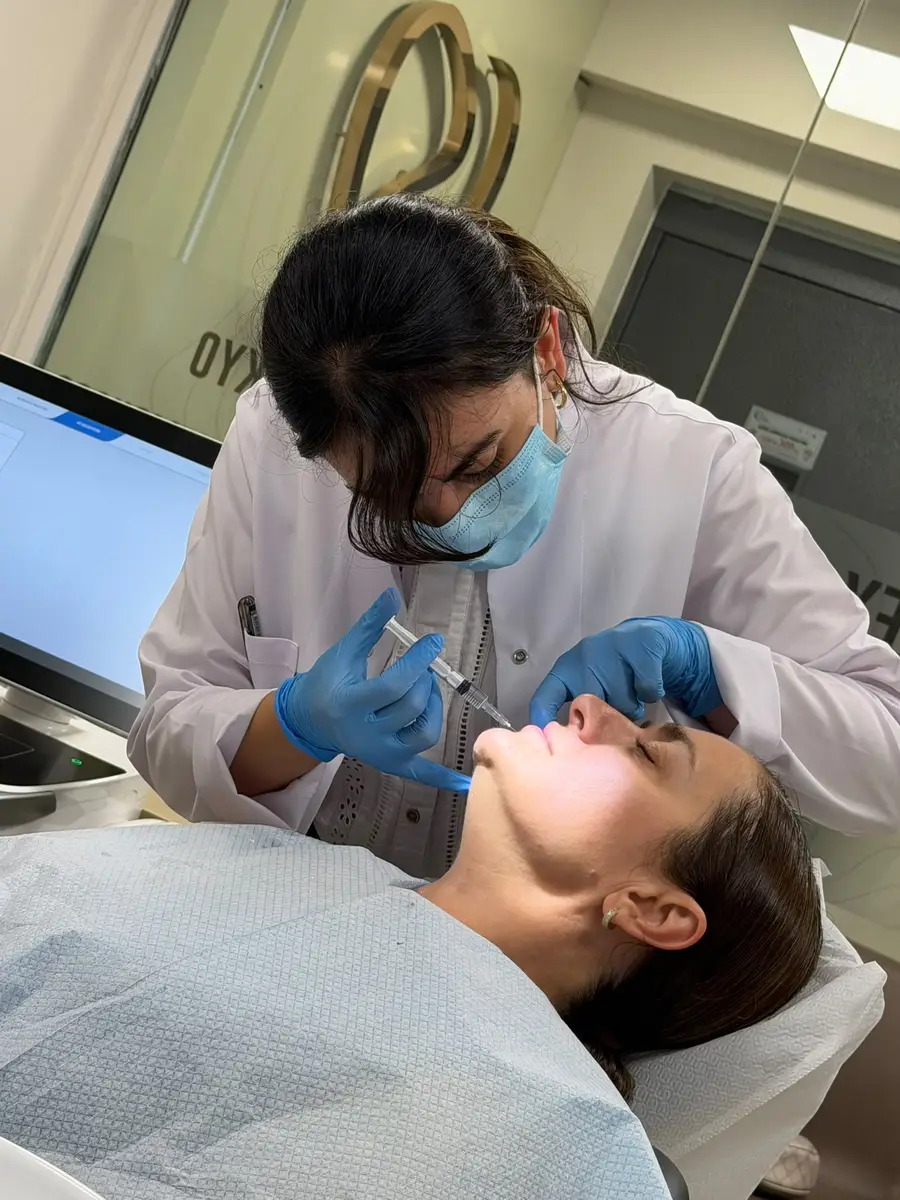
A realistic trip to Istanbul
The sequence below is the clinical pathway, not a holiday itinerary. Your own schedule is confirmed after your case is reviewed.
Non-surgical periodontal treatment — typically 3–5 working days
| Day | What happens |
|---|---|
| Day 1 | Full periodontal assessment: pocket depths recorded around each tooth, bleeding scores, recession, mobility, radiographs. Written treatment plan and personalised hygiene instruction. |
| Day 2 | Subgingival instrumentation of the first half of the mouth under local anaesthetic. Post-treatment instructions. |
| Day 3 | Rest day, or remaining quadrants depending on how treatment is staged. |
| Day 4 | Subgingival instrumentation completed. Hygiene technique reviewed with you, including interdental cleaning. |
| Day 5 | Review, comfort check, written aftercare and maintenance plan to take to your dentist at home. |
Reassessment — typically several weeks later, at home or on a return visit
Pockets are re-measured once the tissue has healed. This is not optional: it is how anyone knows whether the treatment worked, and it determines whether further treatment is needed.
Sequence published by DentVisit, August 2026. Timings are typical clinical ranges and are confirmed individually after case review.
Three practical rules for booking flights:
- Book your maintenance appointment at home before you book your flight. If you cannot arrange one, reconsider the trip.
- Expect gum tenderness and sensitivity to cold for several days after treatment. Do not schedule your most demanding sightseeing for day two.
- If gum treatment is a prerequisite for cosmetic or implant work, ask for both stages in one written plan with the sequence and timings set out, rather than agreeing treatments trip by trip.
Before you travel, you can send your X-ray to DentVisit by WhatsApp for a free pre-assessment and case review, and a detailed written treatment plan is provided before any commitment.
Aftercare once you are back in the UK or Ireland
For gum disease this is not an afterthought section. It is the treatment.
What is true:NHS England’s policy, published on 4 November 2024, states that patients who paid for dental treatment privately in the UK or abroad and later need NHS care “are entitled to access NHS dental care for assessment and evaluation to stabilise their condition”, but that “self-funded care that the NHS would not routinely fund would not usually be offered or replaced once stabilisation has been achieved”. The policy also states that “it is expected that patients would initially seek support from their self-funded dental care provider”.
There is an important difference here from cosmetic work. Gum disease treatment addresses infection and tooth loss, not appearance, so periodontal care is provided on the basis of clinical need under NHS band charges. Access and waiting times are the practical barrier most patients describe, not eligibility. Check current NHS guidance for your own circumstances.
What DentVisit provides: a free pre-assessment and case review from your X-ray before you travel, a detailed written treatment plan before any commitment, English-speaking support, and post-treatment remote follow-up.
What you should arrange yourself, before you travel:
- A dentist and hygienist at home, and a maintenance interval agreed with them. Say clearly that you have had periodontal treatment; the recall interval for treated periodontitis is usually shorter than a standard check-up.
- A copy of your periodontal chart. The pocket measurements taken in Istanbul are the baseline against which every future measurement is compared. Without them, your dentist at home is starting from zero.
- Clarity on who to contact and how, outside clinic hours. DentVisit is open Monday to Friday 10:00–18:00 and Saturday 10:00–17:00, Turkish time (UTC+3), and is closed on Sundays.
- Written answers to the questions the General Dental Council advises patients to ask before going abroad, including “Who will be carrying out my treatment and what qualifications do they have?”, “What aftercare do you provide?”, “Who can I contact for advice after the treatment?” and “If there are complications and I need further treatment, is this included in the initial cost?”
When to worry after gum treatment
Some tenderness, sensitivity to cold and minor bleeding for a few days is expected. The following are not, and should be assessed:
- Pain that increases after the first few days instead of settling.
- Swelling of the face or gum, with fever or a bad taste — this suggests an abscess.
- Any difficulty swallowing or breathing — this is an emergency. Seek urgent local care the same day.
- Bleeding that does not stop or that restarts heavily after several days.
- A tooth that becomes noticeably looser than before treatment.
- Sensitivity that is still severe after several weeks. Some root sensitivity after treatment is normal as gums shrink back and expose root surfaces; severe or worsening sensitivity is not.
- Gums that return to bleeding on brushing after having settled — the earliest sign that disease activity has returned, and a reason to be seen rather than to wait.
Frequently asked questions
Can gum disease be cured?
Gingivitis, which affects only the gum, is reversible with thorough cleaning and good daily hygiene. Periodontitis, which has destroyed supporting bone, is controlled rather than cured — treatment stops the disease progressing but does not routinely regrow lost bone. Anyone promising a cure for advanced gum disease is describing something the evidence does not support.
Is it worth travelling to Turkey for gum treatment alone?
Honestly, usually not. Active treatment is only half the picture; the long-term result comes from maintenance appointments near your home. Travelling makes sense when gum disease must be treated before implants, crowns or bonding you are already coming for. In that case it belongs in the plan as the first stage.
Does deep cleaning hurt?
Subgingival instrumentation is carried out under local anaesthetic, so you should feel pressure and vibration rather than pain during treatment. Afterwards, tenderness and sensitivity to cold for several days is common and usually managed with ordinary painkillers and a sensitivity toothpaste. Pain that increases rather than settles is not expected and should be reported.
Will my gums grow back after treatment?
Generally no. Gum tissue often shrinks slightly after treatment as inflammation resolves, which can make teeth look longer and expose sensitive root surfaces. That is a sign of healing, not of harm, but it is permanent. Lost bone does not regrow with routine treatment. This is why early treatment matters so much more than thorough treatment later.
Can I have veneers, bonding or implants if I have gum disease?
Not until it is treated and stable. Cosmetic work bonded onto an inflamed, changing foundation fails early, and the gum line will move afterwards, spoiling the result. Implants are especially unforgiving, because the bacteria that destroy bone around teeth also destroy bone around implants. Gum treatment comes first, without exception.
How many days do I need in Istanbul for gum treatment?
Typically three to five working days for a full course of non-surgical treatment, depending on how many quadrants need instrumentation and how treatment is staged. Reassessment happens several weeks later, once tissue has healed, either at home or on a return visit. Periodontal surgery, if needed, is planned after that reassessment.
Is gum disease treatment available on the NHS?
Yes. Unlike purely cosmetic treatment, periodontal care addresses infection and tooth loss, so it is provided on the basis of clinical need under NHS band charges. The barrier most patients report is access and waiting times rather than eligibility. Check current NHS guidance for your circumstances, as availability varies between practices.
Will my teeth feel loose after treatment?
Teeth that were already mobile can feel slightly different as swollen tissue settles, and some patients notice more gaps between teeth as inflammation resolves. Increasing looseness is not expected and should be assessed. Where teeth are mobile because of significant bone loss, splinting or replacement may be discussed after reassessment.
Does smoking really affect the result?
Substantially. Analysis of the US NHANES III survey attributed 41.9% of periodontitis cases to current smoking, with current smokers at an odds ratio of 3.97 versus never-smokers (Tomar & Asma, 2000). Smoking also constricts blood flow so gums bleed less, which hides the disease, and it impairs healing after treatment. Stopping improves the odds more than any product.
How often will I need maintenance appointments?
That is set by your dentist or hygienist at home, based on your reassessment findings, and the interval for treated periodontitis is usually shorter than a standard check-up. The evidence for taking it seriously is strong: in a 22-year follow-up of 600 treated patients, half lost no teeth at all to periodontal disease (Hirschfeld & Wasserman, 1978).
Can gum disease come back after treatment?
Yes, and this is the normal course of events rather than a failure. Periodontitis is a chronic condition driven by daily plaque, smoking and general health. Sites that were treated can become active again, which is exactly what maintenance appointments are designed to catch early — while the answer is still a clean rather than an extraction.
Next steps
If your gums bleed when you brush, if you have been told you have pockets, or if a clinic has quoted you for cosmetic work without ever mentioning your gums, the starting point is a proper periodontal assessment with pocket measurements and radiographs.
Once your gums are stable, the cosmetic options open up. For chips, worn edges and small gaps, the most conservative route is composite bonding; for a broader plan, see cosmetic dentistry. If teeth have already been lost, see dental implants — and note that gum treatment is a prerequisite, not an optional extra. If crowded teeth are trapping plaque and making cleaning difficult, orthodontics may be part of the long-term answer.
You can send your X-ray by WhatsApp for a free pre-assessment before you book anything: contact DentVisit.
Medical review and sources
This page is general information about treatment options. It is not a diagnosis, and it is not a substitute for a clinical examination, periodontal charting and radiographs. Individual results vary and cannot be predicted from a web page. If you have facial swelling, fever or difficulty swallowing, seek urgent local dental or medical care today.
Sources
- White DA, Tsakos G, Pitts NB, Fuller E, Douglas GV, Murray JJ, Steele JG. Adult Dental Health Survey 2009: common oral health conditions and their impact on the population. British Dental Journal. 2012 Dec;213(11):567-72. PMID 23222333. doi:10.1038/sj.bdj.2012.1088
- Kassebaum NJ, Bernabé E, Dahiya M, Bhandari B, Murray CJ, Marcenes W. Global burden of severe periodontitis in 1990-2010: a systematic review and meta-regression. Journal of Dental Research. 2014 Nov;93(11):1045-53. PMID 25261053. doi:10.1177/0022034514552491
- Sanz M, Herrera D, Kebschull M, Chapple I, Jepsen S, Beglundh T, Sculean A, Tonetti MS. Treatment of stage I-III periodontitis — The EFP S3 level clinical practice guideline. Journal of Clinical Periodontology. 2020 Jul;47(Suppl 22):4-60. PMID 32383274. doi:10.1111/jcpe.13290
- Van der Weijden GA, Timmerman MF. A systematic review on the clinical efficacy of subgingival debridement in the treatment of chronic periodontitis. Journal of Clinical Periodontology. 2002;29(Suppl 3):55-71. PMID 12787207. doi:10.1034/j.1600-051x.29.s3.3.x
- Hirschfeld L, Wasserman B. A long-term survey of tooth loss in 600 treated periodontal patients. Journal of Periodontology. 1978 May;49(5):225-37. PMID 277674. doi:10.1902/jop.1978.49.5.225
- Tomar SL, Asma S. Smoking-attributable periodontitis in the United States: findings from NHANES III. Journal of Periodontology. 2000 May;71(5):743-51. PMID 10872955. doi:10.1902/jop.2000.71.5.743
- Howe MS, Keys W, Richards D. Long-term (10-year) dental implant survival: A systematic review and sensitivity meta-analysis. Journal of Dentistry. 2019 May;84:9-21. PMID 30904559. doi:10.1016/j.jdent.2019.03.008
- General Dental Council. Going abroad for dental treatment — patient information. gdc-uk.org
- NHS England. Avoidance of doubt: Clinical policy for self-funded dental treatment requiring NHS intervention. Published 4 November 2024. england.nhs.uk
- NHS. Treatment abroad checklist. nhs.uk
Sources reviewed August 2026. PubMed records (title, authors, journal, year, numeric results) verified against the NCBI E-utilities API on 8 August 2026.
Book Appointment
Make an appointment to get detailed information about periodontology treatment.
Book NowImportant Note: The information on this website is for general informational purposes only and does not replace professional medical advice. Please consult a qualified dentist for any health concern or treatment decision.